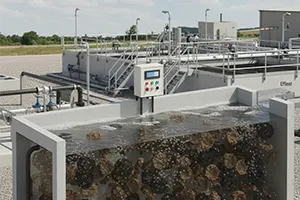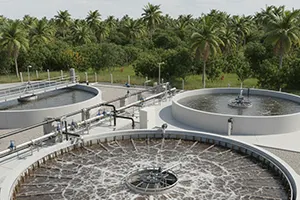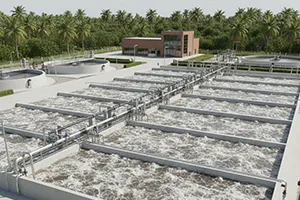
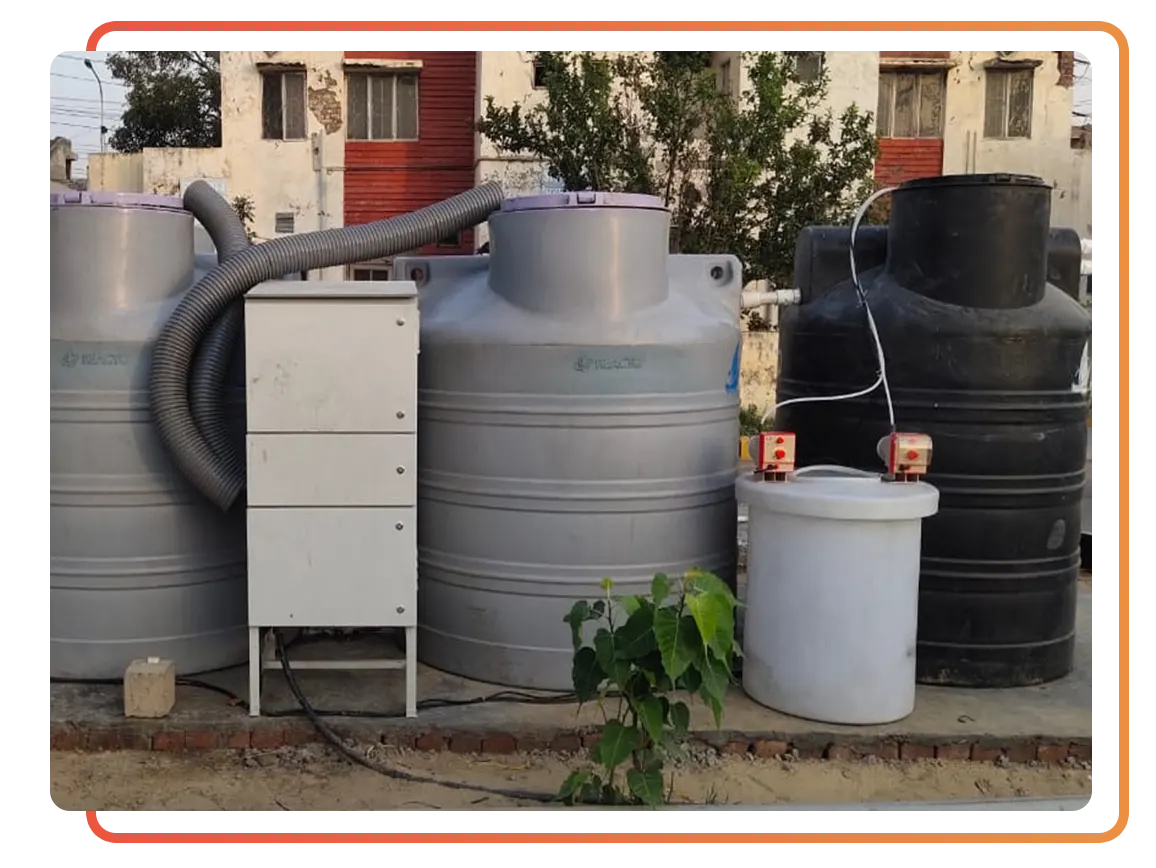
REACTO SBR is an automated, space-efficient sewage treatment system based on sequential batch processing within a single reactor. The technology combines equalization, aeration, clarification, and decanting in controlled cycles, eliminating the need for multiple tanks and reducing overall plant footprint. Advanced PLC-driven controls enable precise regulation of biological reactions, ensuring reliable removal of organic matter and nutrients even under variable flow and load conditions.
Designed for residential townships, commercial complexes, institutions, and industrial facilities, REACTO SBR provides high treatment efficiency with operational flexibility and minimal manual intervention. The system’s compact design, automation capability, and superior effluent quality make it ideal for projects where regulatory compliance and water reuse are critical. Its modular scalability also allows easy capacity expansion to accommodate future load increases.
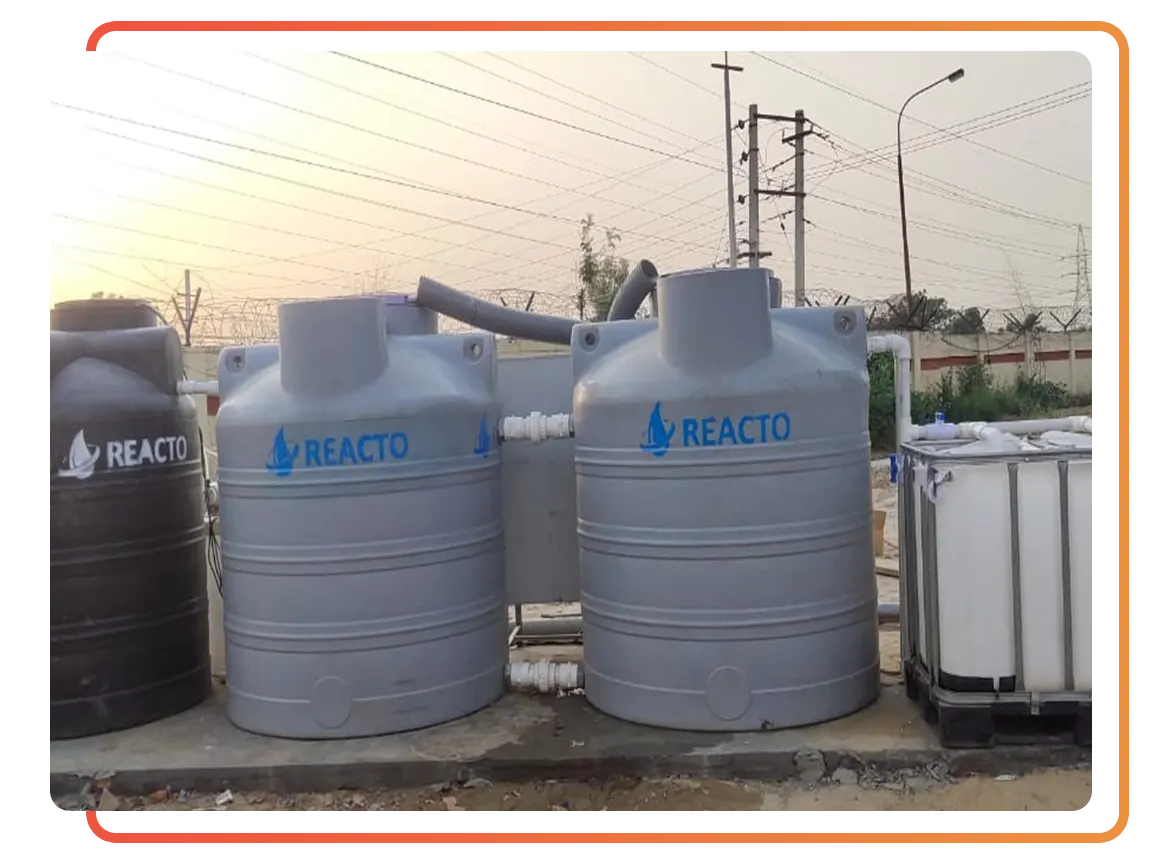
The SBR process follows sequential treatment stages—Fill, React, Settle, and Decant—all carried out in one reactor. Controlled aeration and settling phases allow precise biological treatment without the need for separate clarifiers.
During the fill phase, raw or equalized sewage is introduced into the SBR reactor under controlled hydraulic conditions. Depending on influent characteristics and treatment objectives, filling may occur under static, mixed, or aerated conditions. This phase allows intimate contact between incoming wastewater and active biomass retained in the reactor, initiating biological degradation immediately. The controlled inflow prevents hydraulic shock and ensures uniform distribution of organic load across the treatment cycle.
In the react phase, air is supplied through fine-bubble diffusers to maintain aerobic conditions within the reactor. Dissolved oxygen promotes the growth of aerobic microorganisms responsible for oxidizing organic matter (BOD and COD). During this phase, nitrifying bacteria convert ammonia present in the wastewater into nitrates. The extended aeration period ensures high removal efficiency and stable microbial activity, even under fluctuating influent loads.
Aeration is intermittently stopped while mechanical or hydraulic mixing is maintained to create anoxic conditions. In the absence of dissolved oxygen, denitrifying bacteria utilize nitrates as an alternative oxygen source, converting them into harmless nitrogen gas that escapes into the atmosphere. This phase is critical for biological nitrogen removal and enables compliance with stringent nutrient discharge norms. The duration and frequency of anoxic cycles are optimized through PLC-based control logic.
Following biological treatment, all aeration and mixing are stopped to allow quiescent conditions within the reactor. Under these conditions, activated sludge flocs settle rapidly at the bottom of the tank due to gravity. Since no influent or mechanical disturbance is present during this phase, excellent solid-liquid separation is achieved without the need for secondary clarifiers. This results in a clear supernatant layer above the settled biomass.
Once settling is complete, treated effluent is withdrawn from the reactor using a decanter system. The decanter is designed to extract only the clarified supernatant without disturbing the settled sludge layer. The decant rate is controlled to maintain sludge blanket integrity and ensure consistent effluent quality. The discharged treated water is suitable for reuse applications or further polishing and disinfection, depending on project requirements.
During the idle phase, excess biomass generated during treatment is periodically wasted to maintain the desired Mixed Liquor Suspended Solids (MLSS) concentration within the reactor. Sludge wasting ensures optimal microbial activity and prevents solids over-accumulation. This phase also allows system readiness for the next treatment cycle and provides operational flexibility for maintenance or flow balancing.
All treatment phases are governed by an advanced automation system that dynamically adjusts cycle durations, aeration intensity, and mixing sequences based on influent load and performance targets. This ensures consistent treatment efficiency, reduced operator dependency, and reliable compliance with regulatory standards.
REACTO SBR delivers high-quality treated water suitable for reuse, making it ideal where discharge norms are stringent and water recovery is critical.
Lorem Ipsum is simply dummy text of the printing and typesetting industry. Lorem Ipsum has been the industry's standard dummy text ever since the 1500s.
Read Detailed Case StudyLorem Ipsum is simply dummy text of the printing and typesetting industry. Lorem Ipsum has been the industry's standard dummy text ever since the 1500s.
Read Detailed Case StudyLorem Ipsum is simply dummy text of the printing and typesetting industry. Lorem Ipsum has been the industry's standard dummy text ever since the 1500s.
Read Detailed Case StudyDesigned for durability, performance, and serviceability.